
Foam Core vs Honeycomb Pickleball Paddle: Which Is Better? (2027)
The core is the part of the paddle you never see, but it decides how the paddle feels, how much power it has and how long it lasts. Here’s a complete comparison.
Quick answer
Honeycomb cores (polypropylene) are light, crisp and proven, and they power the vast majority of paddles, but they can suffer from core crush over time. Foam cores are newer, feel softer, quieter and more consistent, need no break-in and are designed to avoid core crush, but they usually cost more. If durability and consistency matter most to you, foam is worth it. If you love a crisp, traditional feel, honeycomb is still excellent.
Why the core matters so much
The core is the part of a paddle you never see, but it decides much of how the paddle plays. It affects power, control, feel, sound, the size of the sweet spot and how long the paddle stays consistent. Two paddles with identical carbon faces can feel completely different because of their cores.
For years, almost every paddle used the same basic core: polypropylene honeycomb. Recently, foam cores have emerged as a serious alternative, led by brands like CRBN with its TruFoam technology. Understanding the difference helps you choose the right paddle, especially if you are investing in a premium one.
What is a honeycomb core?
A honeycomb core is made of thousands of small hexagonal cells, usually polypropylene, sandwiched between two face sheets. It is the same basic structure used in aerospace panels: strong, light and rigid for its weight.
How honeycomb thickness changes the feel
| Core thickness | Feel | Best for |
|---|---|---|
| Around 11–13mm | Very crisp, fast, powerful | Hard hitters |
| Around 14mm | Crisp with some control | Attacking all-court players |
| Around 16mm | Softer, more stable | Control and soft game |
| Around 20mm | Very soft and stable | Maximum control |
Thinner cores return energy faster, so the ball leaves the face quickly. Thicker cores absorb more energy, giving you more dwell time and control.
Core cell size and density
Brands also tune the size and density of the honeycomb cells. Larger or softer cells generally feel more muted; smaller or denser cells can feel firmer. This tuning is part of why premium paddles feel more refined than budget ones.
The weakness: core crush
With heavy use, honeycomb cell walls can compress or break. This is called core crush. It changes how the paddle plays, creating dead spots that feel soft and lifeless, or hot spots where the ball suddenly flies off the face. Some players also notice paddles getting more powerful over time as the core breaks down, which can push balls long.
Not every honeycomb paddle suffers badly from core crush, and premium paddles are generally more resilient. But for players who hit hard and often, it is a real concern.
What is a foam core?
Foam-core paddles replace the honeycomb with a solid or “floating” foam. There are no hollow cells to crush, so the structure is designed to stay consistent over time.
CRBN’s TruFoam line is the best-known example. CRBN says its TruFoam Genesis took 18 months of development and more than 200 prototypes. Other brands, including JOOLA with the Perseus Power FX Foam and Vatic Pro with the V-Sol Pro, now offer foam-core paddles too.
Types of foam cores
- Full foam: the entire core is foam, as in the CRBN TruFoam Genesis. Typically soft, quiet and very consistent.
- Floating foam: foam designed to add pop, as in the CRBN TruFoam Barrage. Combines durability with more power.
- Hybrid designs: some paddles combine foam with honeycomb or add foam around the perimeter for stability. Many thermoformed paddles inject foam into the edges.
Foam vs honeycomb: full comparison
| Honeycomb | Foam | |
|---|---|---|
| Feel | Crisp, classic | Soft, plush, quiet |
| Sound | Pop or crack at contact | Muted thud |
| Power | Depends on thickness | Depends on design; floating foam adds pop |
| Control | Good to excellent (thicker = more) | Excellent |
| Break-in | Often needed, especially thermoformed | Usually none |
| Core crush | Possible over time | Designed to avoid |
| Consistency over months | Can change | Very consistent |
| Weight | Light | Can be slightly heavier |
| Price | $50–$300 | Typically $100–$300 |
| Variety | Huge | Growing |
How each feels on court
Honeycomb
Honeycomb paddles have the feel most players know: a crisp contact with a distinct pop. Thin honeycomb paddles feel fast and explosive; thick ones feel softer and more controlled. Many players love the immediate feedback.
Foam
Foam paddles feel noticeably different. The contact is softer and quieter, and many players describe the ball as staying on the face a fraction longer. That dwell time helps with dinks, drops and resets. Some players initially describe foam as feeling “dead”, but after a few sessions most describe it as controlled.
Power: does foam have less pop?
Not necessarily. A full-foam paddle like the CRBN Genesis is control-first and rewards a full swing, so it can feel less explosive than a thin honeycomb power paddle. But floating-foam designs like the CRBN Barrage are tuned for power. The core type matters less than the specific design.
Durability: does foam really last longer?
Foam cores are designed to avoid core crush because there are no cells to break. That is their biggest advantage. Face texture and edges still wear with use, so a foam paddle is not indestructible, but its core should stay more consistent over time than many honeycomb cores. Read How Long Does a Pickleball Paddle Last?
Are foam core pickleball paddles worth it?
For players who play often and are tired of paddles going dead, yes. A foam paddle that stays consistent longer can cost less over time than replacing honeycomb paddles frequently. The trade-off is feel: if you love the crisp response of a traditional paddle, foam may take some getting used to.
Foam is especially worth it if you:
- Play three or more times a week
- Hit hard and have experienced core crush before
- Rely on a consistent soft game
- Want a paddle that needs no break-in
- Prefer a quieter paddle (useful in noise-sensitive communities)
Honeycomb may suit you better if you:
- Love a crisp, poppy feel
- Want the widest choice of shapes and thicknesses
- Prefer a lighter paddle
- Are on a tight budget
Best foam core paddles

CRBN TruFoam Genesis
★ 4.5 · 135 Amazon reviews100% foam core, no break-in, outstanding touch.

CRBN TruFoam Barrage
★ 4.4 · 74 Amazon reviewsFloating foam core tuned for pop.

Vatic Pro V-Sol Pro 16mm
★ 4.4 · 310 Amazon reviewsFoam core at a value price with 300+ reviews.

JOOLA Perseus Power FX Foam
Foam-core Perseus with a high-grit face.
Best honeycomb paddles

JOOLA Pro V (Perseus)
★ 4.4 · 162 Amazon reviewsKineticFrame construction and raw carbon face.

Selkirk LUXX Control
★ 4.4 · 598 Amazon reviewsFlorek carbon and nearly 600 reviews.

Paddletek Bantam TKO-CX 14.3mm
★ 4.3 · 45 Amazon reviewsThin polymer honeycomb for a fast response.
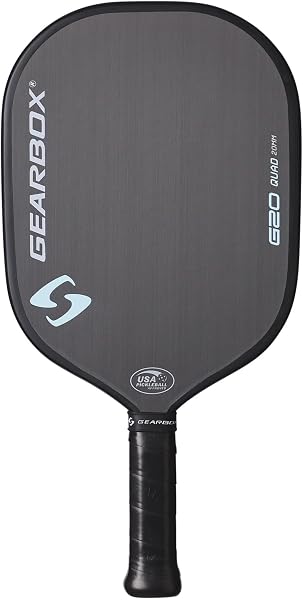
Gearbox G20 (20mm core)
★ 5.0 · 7 Amazon reviews20mm core for maximum stability.
How each core affects specific shots
| Shot | Honeycomb (thin) | Honeycomb (16mm) | Foam |
|---|---|---|---|
| Drives | Fast and powerful | Solid | Good with a full swing |
| Third-shot drops | Harder to keep soft | Comfortable | Very comfortable |
| Dinks | Lively | Controlled | Very controlled |
| Blocks | Can pop up | Stable | Very stable |
| Speed-ups | Excellent | Good | Good |
| Resets | Challenging | Comfortable | Excellent |
The break-in period explained
Many honeycomb paddles, especially thermoformed models, change slightly over their first hours of play. Some become a little more powerful as the materials settle. Players call this the break-in period. It is not necessarily a problem, but it means the paddle you buy may feel slightly different after a few weeks.
Foam-core paddles like the CRBN Genesis are designed to need no break-in. They should feel the same out of the box as they do months later, which is valuable if you want to build consistent muscle memory.
Noise: an overlooked advantage of foam
Pickleball noise has become an issue in some communities, and a few neighborhoods and clubs have introduced noise rules. Foam-core paddles produce a quieter, more muted sound than many honeycomb paddles. If you play near homes or at a club concerned about noise, a foam paddle can be a practical choice.
Arm comfort
Softer, thicker cores and foam cores generally absorb more vibration than thin, crisp honeycomb cores. Players with tennis elbow or wrist discomfort often find foam or 16mm+ paddles more comfortable. Combine a soft core with a well-fitted grip for the best results.
Common myths
- “Foam paddles are dead.” They are softer and quieter, but well-designed foam paddles still generate plenty of pace with a full swing.
- “Honeycomb always gets core crush.” Many premium honeycomb paddles stay consistent for a long time with normal use; core crush is most common with heavy hitters and frequent play.
- “Thicker always means less power.” Thickness affects feel, but construction, shape and face material matter just as much.
What about solid cores?
Gearbox is known for a third approach: solid-span technology (SST), a solid carbon core rather than honeycomb or foam. It gives a firm, consistent feel. Learn more in our Gearbox guide.
The future of paddle cores
Foam cores are one of the fastest-moving areas of paddle design. As more brands experiment with foam, floating foam and hybrid constructions, expect more choice, more shapes and more price points. Honeycomb is not going away, though: it remains light, versatile and familiar, and brands keep refining it with new cell sizes, densities and thermoformed constructions. Many players will end up choosing based on feel preference rather than one technology being clearly better.
How to choose
- Prioritize durability? Choose foam.
- Love a crisp, poppy feel? Choose thin honeycomb.
- Want control with a traditional feel? Choose 16mm honeycomb.
- Want a firm, solid feel? Try a Gearbox solid core.
- Not sure? Try a friend’s foam paddle for a few games before buying.
Testing a foam paddle before you buy
If you can, borrow a foam paddle for a session. Hit a set of third-shot drops, a few minutes of dinking and some drives. Pay attention to how the ball feels on soft shots and whether you like the quieter sound. Most players know within twenty minutes whether foam suits them.
Whichever core you choose, protect your paddle with a cover and keep it out of hot cars. Heat is hard on every type of core.
The bottom line
Honeycomb cores are proven and versatile, with a crisp feel and endless options. Foam cores are newer, softer, quieter and designed to stay consistent without break-in. For frequent players who want their paddle to feel the same month after month, foam is one of the best upgrades available. For the full premium picture, see our ranking of the 10 most expensive pickleball paddles, read Why Are Pickleball Paddles So Expensive?, or compare face materials in carbon fiber vs fiberglass.
Frequently Asked Questions
Is foam or honeycomb better for pickleball?
Foam is better for consistency and durability; honeycomb offers a crisper feel and more variety. Choose based on your preferences and how often you play.
Do foam core paddles have more power?
Not necessarily. Full-foam paddles are control-first, while floating-foam designs like the CRBN Barrage add power.
Do foam paddles get core crush?
Foam cores are designed to avoid the core crush that can affect honeycomb paddles.
What is core crush?
When honeycomb cells compress or break, creating dead or hot spots on the paddle.
Are foam core pickleball paddles worth it?
For frequent players who want lasting consistency, yes.