
Cheap vs Expensive Pickleball Paddle: What’s the Real Difference?
A $50 paddle and a $250 paddle can look almost identical. On court, they don’t play the same. Here’s a detailed side-by-side look at what you actually get for the extra money.
Quick answer
Cheap paddles (under $80) usually have fiberglass or smooth graphite faces, basic honeycomb cores and glued construction. They are fine for learning. Expensive paddles ($150–$300) use raw carbon fiber faces, tuned or foam cores and thermoformed construction, which gives you more spin, a bigger sweet spot, better consistency and a longer lifespan. The difference is real, but it matters most once you play regularly.
Budget vs premium pickleball paddles: side-by-side
| Feature | Cheap paddle | Expensive paddle |
|---|---|---|
| Typical price | $20–$80 | $150–$300 |
| Face | Fiberglass or smooth graphite | Raw / textured carbon fiber |
| Core | Basic honeycomb | Tuned honeycomb or foam |
| Construction | Glued layers + edge guard | Thermoformed / unibody |
| Spin | Low | High to very high |
| Power | Either dead or trampoline-like | Balanced and tunable |
| Control on soft shots | Unpredictable | Precise |
| Sweet spot | Small | Large and stable |
| Consistency over time | Can develop dead spots | Stays consistent longer |
| Lifespan (regular play) | 3–6 months | 6–18 months+ |
| Warranty & support | Limited | Usually better |
Why the price gap is so large
Cheap and expensive paddles can look almost identical in photos. Both are roughly 16 inches long, both have a grip, both have a colorful face. The differences are inside and on the surface, and they come down to materials, construction and engineering. If you want the complete explanation, read Why Are Pickleball Paddles So Expensive?
Spin: the biggest difference you will feel
Spin is where premium paddles separate themselves most clearly. Expensive paddles use raw or textured carbon fiber, a gritty surface that grabs the ball at contact. That grip lets you:
- Hit topspin drives that dip sharply into the court
- Roll volleys down at your opponents’ feet
- Hit slice serves and returns that skid and stay low
- Shape dinks so they are harder to attack
Cheap fiberglass faces are smoother and lose what texture they have quickly. You can still hit spin with technique, but the ball will not grip and curve the same way. If spin matters to your game, the face material alone can justify upgrading. Learn more in carbon fiber vs fiberglass.
Power and control
Budget paddles usually fail at one end of the spectrum. Some feel dead: you have to swing very hard to get pace. Others are so lively that the ball flies off the face like a trampoline, which is fun on drives and frustrating on dinks.
Premium paddles are engineered to balance the two. Thermoformed edges, tuned core thicknesses and new frame designs let a paddle add pop on big swings while staying calm on soft shots. JOOLA’s KineticFrame on the Pro V is a good example of this balance.

JOOLA Pro V (Perseus)
★ 4.4 · 162 Amazon reviewsAround $300, with KineticFrame construction and a raw carbon face.
Sweet spot and forgiveness
On a cheap paddle, hitting slightly off-centre often sends the ball into the net or wildly off target. Expensive paddles spread weight towards the edges and seal the core, making the sweet spot larger and off-centre hits more stable. For intermediate players, this means fewer unforced errors, especially in fast exchanges at the kitchen line.
Weight and comfort
Budget paddles are often heavier or poorly balanced, which can tire your arm over a long session. Premium paddles are usually well balanced at around 7.8–8.4 ounces, with comfortable handles and better shock absorption. Players with elbow or wrist discomfort often notice the difference quickly.
Consistency and durability
Cheap honeycomb cores can break down after a few months of regular play. This “core crush” creates dead spots or unexpectedly hot spots, so the paddle stops playing the way it did when new. Face texture also wears smooth faster on budget paddles.
Premium paddles last longer. Foam-core paddles like the CRBN TruFoam Genesis are designed specifically to avoid core crush and need no break-in period. Read more in How Long Does a Pickleball Paddle Last? and foam core vs honeycomb.

CRBN TruFoam Genesis
★ 4.5 · 135 Amazon reviewsAll-foam core, no break-in, highest rating on our premium list.
Real-world example: what changes when you upgrade
Imagine a 3.0 player moving from a $50 fiberglass paddle to a $200 raw carbon paddle. In the first session, they will usually notice three things. Their third-shot drops feel more controlled because the paddle is quieter on soft contact. Their serves and drives have more spin, so they dip into the court rather than floating long. And off-centre blocks at the kitchen hold their line instead of popping up. None of this replaces practice, but it removes some of the randomness that a cheap paddle adds.
When a cheap paddle is the right choice
A budget paddle is not a mistake. It is the right call when:
- You are trying pickleball for the first time
- You play only occasionally or socially
- You need several paddles for family, guests or a group
- You are buying for kids or a school program
- You want a backup paddle for travel or the beach
- You are still learning the basics and do not yet know whether you prefer power or control
In these situations, a comfortable $40–$80 paddle gives you everything you need. Spend the savings on court time or a lesson.
When an expensive paddle is worth it
Premium makes sense when:
- You play two or more times a week
- You are working on spin shots such as rolls, topspin drives and cut serves
- You play leagues, ladders or tournaments
- You are tired of paddles losing their pop within months
- You want a larger sweet spot to reduce unforced errors
For a full breakdown, read Are Expensive Pickleball Paddles Worth It?
The middle ground: $100–$200
You do not have to choose between $50 and $300. The middle of the market offers some of the best value in pickleball, especially former flagships and value-focused premium brands.

JOOLA Pro IV (Perseus)
★ 4.2 · 100 Amazon reviewsRaw carbon face and elongated shape for around $150.
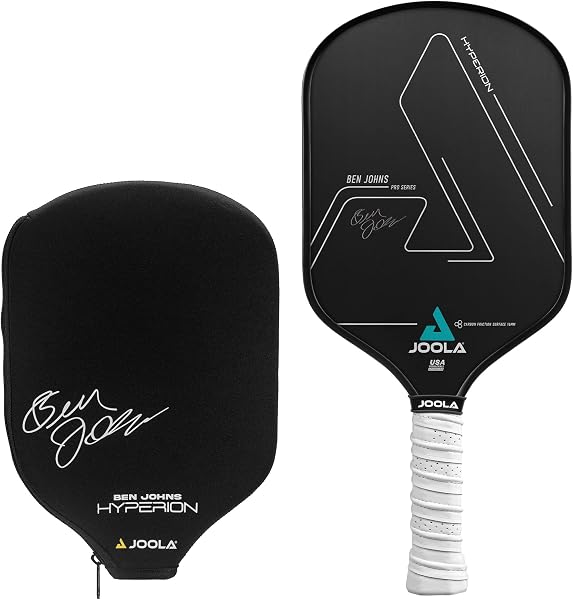
JOOLA Ben Johns Hyperion CFS
★ 4.4 · 283 Amazon reviewsCarbon friction surface and a forgiving shape.

Selkirk SLK ERA Power
★ 4.5 · 283 Amazon reviewsSelkirk carbon hybrid power paddle around $200.

Vatic Pro V-Sol Pro 16mm
★ 4.4 · 310 Amazon reviewsFoam-core technology at around $110.
These paddles give you most of the spin, control and consistency of a flagship for noticeably less. For more options, see our list of the best paddles under $300.
Cost per session: the hidden math
Price tags can be misleading. Consider a regular player who plays three times a week:
| Paddle | Price | Typical useful life | Approx. cost per session |
|---|---|---|---|
| Budget fiberglass | $60 | ~4 months | ~$1.15 |
| Mid-range carbon | $150 | ~9 months | ~$1.30 |
| Premium foam core | $230 | ~15 months | ~$1.20 |
These are rough illustrations, and real lifespans vary with play style and care. But they show why frequent players often find premium paddles cost about the same per game while playing far better.
How to spot a “fake premium” paddle
Not every expensive-looking paddle is worth premium money. Be cautious of:
- Listings that rely on buzzwords like “T700” or “pro” without detailing the core or construction. See what T700 really means.
- Very new products priced near flagship level with almost no reviews
- Unknown sellers offering famous flagships at suspiciously low prices, which can be counterfeits
- Paddles without USA Pickleball approval if you plan to play sanctioned events
Stick to established brands, check buyer ratings (we use 4.2 stars or higher as a minimum) and buy from authorized sellers.
Cheap vs expensive by player type
| Player | Our recommendation |
|---|---|
| First-timer | Cheap ($40–$80) |
| Casual social player | Cheap to mid-range ($60–$150) |
| Regular 3.0–3.5 player | Mid-range to premium ($150–$230) |
| League / tournament player | Premium to flagship ($200–$300) |
| Collector | Limited editions and designer paddles |
What about the most expensive paddles?
At the very top, you will find collector items like the JOOLA Gold Perseus and designer sets from Louis Vuitton and Versace. These are about rarity and style, not performance, and a $300 flagship will outplay them on court.
Arm comfort: an underrated difference
One difference that rarely shows up in spec sheets is how a paddle feels on your arm after two hours. Cheap paddles often transmit more vibration, especially on mishits, and poorly balanced paddles make your forearm work harder on every swing. Premium paddles, particularly foam-core and thicker 16mm models, tend to absorb more shock and feel quieter at contact.
If you have ever had tennis elbow or wrist discomfort, this alone can justify a better paddle. Look for a softer, thicker core, a balanced weight around 7.8–8.2 ounces and a grip size that lets you hold the paddle without squeezing.
How to test the difference yourself
If you are unsure whether an expensive paddle will feel different for you, try before you buy:
- Borrow a friend’s premium paddle for a few games and pay attention to dinks, drops and blocks, not just drives.
- Hit the same drill with both paddles, such as 20 third-shot drops, and count how many land in the kitchen.
- Try spin shots: a topspin roll and a slice serve. Watch how much the ball moves.
- Check your arm after a full session with each paddle.
Most players notice the difference in control and spin within the first few minutes. If you do not, a mid-range paddle may be all you need for now.
Resale and upgrade value
Another small advantage of premium paddles from well-known brands is that they hold some value. A lightly used JOOLA, Selkirk or CRBN paddle can often be sold or traded to another player when you upgrade, while budget paddles have almost no resale value. It will not cover the full cost of your next paddle, but it does narrow the real price gap a little more.
A note on grip size and shape
Price is not the only thing to compare. A cheap paddle with the right grip size and shape for your hand can feel better than an expensive one that does not fit. Whatever you spend, choose a handle you can hold without squeezing and a shape that suits your style.
Our verdict
Cheap paddles are great for learning and casual play. Expensive paddles are better in almost every measurable way: spin, control, forgiveness, consistency and lifespan. The difference grows as your skills improve. If you play regularly, upgrading to a premium carbon paddle is one of the most noticeable changes you can make.
When you are ready to compare the best options, see our ranked list of the 10 most expensive pickleball paddles worth buying, or check what each price tier gets you.
Frequently Asked Questions
Is there a big difference between a cheap and expensive pickleball paddle?
Yes, mainly in spin, sweet-spot size, consistency, comfort and durability. The difference grows as your skills improve.
Can a cheap pickleball paddle be good?
Yes. A well-made $50–$80 composite paddle is perfect for beginners and casual players.
Do expensive paddles last longer?
Generally yes. Premium carbon paddles typically last longer under regular play, and foam-core paddles are designed to avoid core crush.
What is the best middle-ground paddle?
The JOOLA Pro IV, JOOLA Hyperion CFS and Selkirk SLK ERA Power offer premium performance for around $150–$200.
How can I tell if an expensive paddle is worth the price?
Look for a raw carbon face, clear core and construction specs, USA Pickleball approval, an established brand and ratings of 4.2 stars or higher.