
Kevlar Pickleball Paddles: Kevlar vs Carbon Fiber (2027 Guide)
Kevlar, the material used in body armor, has started appearing in some of the most expensive pickleball paddles. Here’s what it does and how it compares to carbon fiber.
Quick answer
Kevlar (an aramid fiber) is extremely tough and slightly more flexible than carbon fiber. In pickleball paddles it is usually woven into hybrid faces with carbon to add pop, vibration dampening and durability. Pure raw carbon faces still tend to offer more precise control and spin. Kevlar paddles are niche and usually expensive, with some boutique Kevlar-weave paddles listed around $370, so they sit among the most expensive paddles on the market.
What is Kevlar?
Kevlar is DuPont’s brand name for a para-aramid synthetic fiber, first developed in the 1960s and famous for its use in bulletproof vests and protective gear. It has an exceptional strength-to-weight ratio and is highly resistant to impact, cutting and abrasion. Unlike carbon fiber, which is very stiff, Kevlar has a little more give, which helps it absorb energy.
Those properties have made Kevlar popular across sports equipment: kayaks, canoes, racing sails, bicycle tires, tennis and squash rackets and now pickleball paddles. In each case, it is used to add toughness and absorb shock.
How is Kevlar used in pickleball paddles?
Most “Kevlar paddles” are actually hybrids. Kevlar threads are woven together with carbon fiber in the paddle face, often in a distinctive gold-and-black pattern. The Kevlar adds:
- A little flex that can increase pop on drives
- Vibration dampening for a softer, more comfortable feel
- Toughness that helps the face resist impact damage
The carbon in the weave provides stiffness, precision and spin.
A smaller number of boutique paddles use a full Kevlar weave surface. One handmade US paddle with a Kevlar weave surface, marketed with aerospace-grade materials, has been listed at around $370, which puts it near the top of the market alongside the most expensive flagships.
Kevlar vs carbon fiber pickleball paddles
| Kevlar / Kevlar hybrid | Carbon fiber | |
|---|---|---|
| Stiffness | Slightly more flexible | Very stiff |
| Power | More pop from flex | Depends on core and construction |
| Control | Good | Excellent |
| Spin | Good (depends on texture) | Excellent (raw / textured) |
| Vibration | Dampened | Crisper |
| Durability | Very high impact resistance | High |
| Availability | Limited | Very wide |
| Price | Often premium | Wide range |
Pros and cons of Kevlar paddles
Pros
- Extra pop from slight flex
- Dampened vibration, comfortable on the arm
- Excellent toughness and impact resistance
- Distinctive look
Cons
- Less precise control than pure carbon
- Fewer models and fewer reviews
- Often expensive
- Harder to find on mainstream marketplaces
Who should consider a Kevlar paddle?
- Players with arm sensitivity who want a dampened feel
- Players who want extra pop without a thin, harsh core
- Collectors and enthusiasts who enjoy unique materials
- Players who value toughness and want a face that resists damage
Who should stick with carbon?
- Spin-focused players, because raw carbon faces are the spin leaders
- Control players who want maximum precision
- Buyers who want lots of reviews and options, since carbon dominates the market
- Value-focused buyers, as carbon paddles come in every price range
A brief history of Kevlar in sport
Kevlar was invented by chemist Stephanie Kwolek at DuPont and introduced commercially in the 1970s. Its first famous uses were in tires and protective vests, but sports manufacturers quickly saw its potential. Canoe and kayak builders used it to make hulls that were light yet extremely tough. Racket makers blended it into tennis and squash frames to add strength and reduce vibration. Sailmakers used it for strong, low-stretch sails.
Pickleball is the latest sport to adopt Kevlar. As paddle makers looked beyond fiberglass and carbon for new ways to tune feel, Kevlar’s combination of toughness and dampening made it a natural candidate, particularly for premium and boutique paddles.
How Kevlar compares at the molecular level
Without getting too technical, the difference comes down to how the fibers behave under stress. Carbon fibers are extremely stiff and resist bending, which makes them precise but transmits more vibration. Aramid fibers like Kevlar are strong in tension but have a little more give and absorb energy well. When you combine them in one weave, you can tune a face to be stiff enough for control while softening the harshness of impact.
What a Kevlar paddle feels like
Players who try a Kevlar-hybrid paddle for the first time often describe three sensations. First, the contact feels slightly softer and more muted than a pure carbon face. Second, drives can have a little extra pop because of the face’s give. Third, mishits sting less, which many players with sensitive elbows appreciate. The trade-off some notice is a touch less precision on very delicate shots compared with a stiff raw carbon face.
Kevlar vs fiberglass
Kevlar and fiberglass both add more flex and pop than stiff carbon. The difference is toughness and dampening: Kevlar absorbs more vibration and resists impact damage far better. Fiberglass is much cheaper and very common on budget and power paddles. If you like the lively feel of fiberglass but want something more refined, a Kevlar hybrid can be an interesting middle ground. Compare materials in carbon fiber vs fiberglass.
How Kevlar affects each shot
| Shot | Kevlar hybrid | Raw carbon |
|---|---|---|
| Drives | Extra pop | Pace plus heavy topspin |
| Third-shot drops | Soft, dampened | Precise |
| Dinks | Comfortable | Very precise |
| Blocks | Absorbs pace | Stable |
| Serves | Lively | Spin and placement |
| Roll volleys | Good | Excellent |
Are Kevlar pickleball paddles legal?
Kevlar paddles can be USA Pickleball approved, just like carbon and fiberglass paddles. What matters is that the specific model has been tested and approved. Always check the approved list before playing sanctioned events.
Why are Kevlar paddles so expensive?
Kevlar is costly to produce and harder to cut and work with than carbon or fiberglass. It dulls cutting tools and requires careful handling during manufacturing. Kevlar paddles are also usually made in smaller quantities, often by boutique brands, which raises the cost per paddle. For a broader explanation of paddle pricing, read Why Are Pickleball Paddles So Expensive?
Kevlar and arm comfort
One of the most common reasons players try Kevlar is comfort. Its dampening properties can reduce the sting of off-centre hits and the cumulative vibration of a long session. That said, the core matters even more than the face for comfort. A foam-core or thick 16mm paddle with a carbon face can also feel very comfortable. If arm comfort is your priority, consider both options. See foam core vs honeycomb.
Proven alternatives to Kevlar
Kevlar paddles are hard to find on Amazon with strong review histories, so here are proven premium paddles that deliver many of the same benefits: comfort, pop and durability.

CRBN TruFoam Genesis
★ 4.5 · 135 Amazon reviewsAll-foam core gives a quiet, plush feel.

JOOLA Pro V (Perseus)
★ 4.4 · 162 Amazon reviewsKineticFrame flex adds pop without harshness.

CRBN TruFoam Barrage
★ 4.4 · 74 Amazon reviewsFloating foam core for pop with durability.

Selkirk SLK ERA Power
★ 4.5 · 283 Amazon reviewsCarbon fiber hybrid face for lively power.
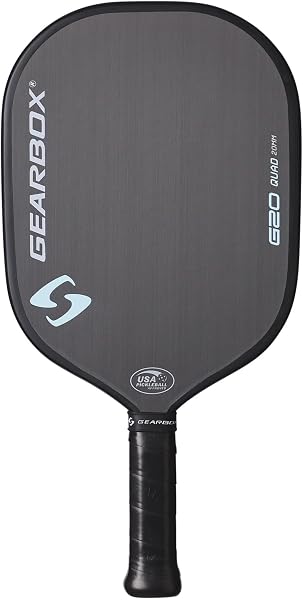
Gearbox G20 (20mm core)
★ 5.0 · 7 Amazon reviewsThick 20mm core for a soft, stable feel.
How to buy a Kevlar paddle wisely
- Check reviews carefully. Kevlar paddles often have fewer reviews, so read detailed feedback.
- Confirm what “Kevlar” means on the listing. Is it a full Kevlar weave or a carbon-Kevlar hybrid?
- Check the core. As always, the core shapes the feel more than the face.
- Confirm USA Pickleball approval if you play tournaments.
- Buy from reputable sellers to avoid misleading listings.
Caring for a Kevlar paddle
Kevlar is tough, but its surface can still pick up ball residue and wear over time. Clean it gently with a damp cloth, avoid harsh chemicals and store it in a paddle cover. Keep it out of direct sunlight and hot cars, as aramid fibers can degrade with prolonged UV exposure.
Kevlar paddles by player type
| Player | Kevlar a good fit? | Why |
|---|---|---|
| Beginner | Not usually | Expensive and limited choice; a forgiving carbon or composite paddle is better value |
| Recreational with arm discomfort | Possibly | Dampening can improve comfort, though foam-core carbon paddles also help |
| Power player | Possibly | Extra pop from the hybrid face |
| Spin specialist | Usually not | Raw carbon faces lead on spin |
| Control specialist | Usually not | Stiff carbon offers more precision |
| Collector / enthusiast | Yes | Unique material and look |
Kevlar vs the most expensive carbon paddles
The most expensive mainstream carbon paddles, such as the JOOLA Pro V, achieve power and comfort in other ways: refined frame construction, tuned cores and premium raw carbon faces. Boutique Kevlar paddles take a different route to similar goals. Neither approach is universally better; it comes down to feel. If possible, try both before committing to a premium price.
Kevlar and sustainability
Like carbon fiber, Kevlar is a synthetic, energy-intensive material that is difficult to recycle. Because it is so tough, though, a Kevlar paddle face can resist impact damage well, and a paddle that lasts longer means fewer replacements over time.
The future of Kevlar in pickleball
As brands keep experimenting with materials, expect to see more hybrid faces that combine carbon with Kevlar, fiberglass or other fibers to fine-tune feel. For now, raw carbon remains the mainstream choice for spin and control, while Kevlar occupies a premium niche for players who want something different.
Common myths about Kevlar paddles
- “Kevlar paddles are indestructible.” Kevlar is very tough, but the face can still wear, the core can still degrade and edges can still chip.
- “Kevlar always means more power.” It can add pop, but the core and construction have a bigger effect on power.
- “Kevlar is only for show.” The gold weave looks distinctive, but Kevlar also changes feel by adding dampening and toughness.
- “Kevlar paddles are not allowed in tournaments.” Approved Kevlar models are legal for sanctioned play.
Should you try a Kevlar paddle?
If you are curious and your budget allows, a Kevlar hybrid can be a rewarding experiment, especially if you want a softer, dampened feel with a little extra pop. Read detailed reviews, confirm the construction and buy from a reputable seller. If you want a safe, proven choice instead, a premium carbon paddle with a foam or 16mm core will give you comfort, control and durability with far more reviews behind it.
Either way, choose the core and shape that suit your style first, then decide on the face material.
Key takeaways
- Kevlar is usually woven with carbon in hybrid paddle faces.
- It adds pop, vibration dampening and toughness.
- Raw carbon still leads on spin and precision.
- Kevlar paddles are niche, often expensive and have fewer reviews.
- Foam-core carbon paddles offer similar comfort with more proven options.
The bottom line
Kevlar paddles offer extra pop, vibration dampening and toughness, usually in hybrid carbon-Kevlar faces, and some boutique Kevlar paddles rank among the most expensive in the sport. For most players, a well-built carbon paddle remains the safer and more versatile choice. If you want comfort and durability, foam-core carbon paddles deliver similar benefits with far more reviews. See the best options in our ranking of the 10 most expensive pickleball paddles.
Kevlar and the most expensive paddles
Kevlar appears most often in boutique and small-batch paddles, which is why Kevlar-weave paddles can rank among the most expensive on the market. Mainstream flagships from JOOLA, Selkirk and CRBN instead rely on carbon faces combined with advanced cores and construction. If you are drawn to Kevlar for its feel, compare it carefully with these flagships, and remember that the best paddle is the one that matches your style and has a proven track record.
Final thoughts on Kevlar
Kevlar suits players who want a dampened feel with extra pop; spin-focused and control players are usually better served by raw carbon.
Frequently Asked Questions
Is Kevlar better than carbon fiber for pickleball?
Not necessarily. Kevlar adds pop, toughness and dampening, while carbon fiber offers more precise control and spin.
Are Kevlar pickleball paddles legal?
Yes, Kevlar paddles can be USA Pickleball approved. Check the specific model.
Why are Kevlar paddles expensive?
Kevlar is costly and hard to work with, and most Kevlar paddles are made in small quantities.
Do Kevlar paddles reduce vibration?
Yes. Kevlar’s dampening properties can make paddles more comfortable on the arm.
What is a carbon Kevlar hybrid paddle?
A paddle whose face weaves Kevlar together with carbon fiber to blend pop and dampening with stiffness and spin.